
 IB Docs (2) Team

3. The role and significance of key actors/groups

This page examines in more deatil the role of key individuals and organisations in the struggle against apartheid.
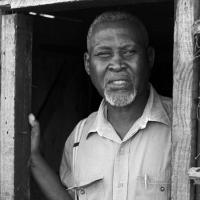
What is the point that Chief Lutuli is making in the extract below?
Who will deny that thirty years of my life have been spent knocking in vain, patiently, moderately and modestly at a closed and barred door? What have been the fruits of moderation? The past thirty years have seen the greatest number of laws restricting our rights and progress, until today we have reached a stage when we have no rights at all.
Chief Lutuli, President of the ANC, 1952 - 67
Two key individuals who led the struggle against apartheid were Chief Lutuli and Nelson Mandela.
According to this source, what similarities and differences are there between the lives and role of Chief Lutuli and Nelson Mandela?
They were both principled politically and they were outstanding leaders of their time. They were both recipients of the Nobel Peace Prize with Luthuli receiving it in 1960 and Nelson Mandela becoming its co-recipient with President F.W. de Klerk in 1993. Luthuli and Mandela served as presidents of the ANC at very important points of this organisation’s life. Luthuli presided over this liberation movement at the time of its transition to the underground and armed struggle in the 1950s and1960s. Mandela became the president of the organisation after it had re-emerged from the underground and conditions of illegality and at the time of the cessation of hostilities between itself and the apartheid regime in the early 1990s.
Chief Albert Luthuli and Nelson Mandela tried hard to initiate talks to resolve the South African political conflict in the early 1960s, but it was Nelson Mandela who succeeded to lead the ANC through the negotiations which paved the way for the ushering in of a democratic dispensation from 1994 onwards. Both leaders propagated reconciliation and nation-building under conditions of utmost hostility on the part of the apartheid regime. The remarkable quality of their leadership was the absence of bitterness and revenge as they both strongly believed that their struggles for freedom and social justice were too noble to be tainted by such vices.
https://luthulimuseum.org.za/project/in-conversation-chief-luthuli-and-nelson-mandela/
Watch the following video on Mandela and Luthuli; make notes on the contribution and activities of both men.
Research further the roles of Nelson Mandela and Albert Luthuli in the Apartheid struggle.
Create an A3 profile sheet for each one which includes: photo(s), significant dates and events they were involved in which affected the Apartheid struggle up to 1964, key quotes.
Write a paragraph for each one to summarise their contribution to the Apartheid struggle.
You will find these resources useful:
Chief Luthuli
Mandela
The Guardian: A life in pictures
Also see the video on Mandela on the video page: 4. Apartheid South Africa: Videos and activities
In the 1950s, the African National Congress turned to grassroots organizing to work against increasing racial restrictions. Women played a key role, encouraging the larger democratic movement to include women’s issues and fostering the leadership of women. The newly formed Federation of South African Women began organizing women of all races to fight together for equality. The federation started locally but spread throughout the country, organizing from street to street and within trade unions. These grassroots efforts led to many local demonstrations and culminated in the women’s march on Pretoria, the capital, in 1956 (see above)
Research the role of women in the resistance against Apartheid.
- The Black Sash Organisation
- the FSAW
Also resarch the role of key women in the fight against apartheid:
- Winnie Mandela,
- Helen Suzman
- Ruth First.
Look at actions they took against apartheid and the impact that their actions had.
What was the role of anti-Apartheid organisations?
The ANC and the SACP worked together through much of the Apartheid area to fight the government's policies; the SACP was also involved in the armed wing of the ANC, Umkhonto we Sizwe.
You have already read about a lot of the activities of the ANC in the past two pages.
Recap the key actions and the development of the ANC by reading this article authored by Padraig O’Malley on the Nelson Mandela Foundation site.
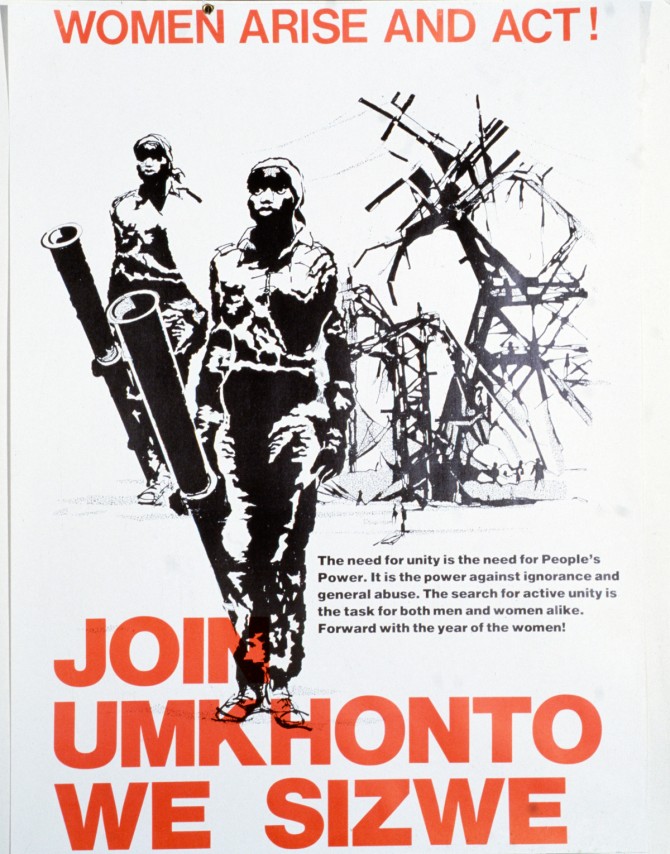 Umkhonto we Sizwe (MK) (Spear of the nation) was the military wing of the African National Congress (ANC). Founded December 16 1961 by the ANC and SACP to take a new more violent approach to the apartheid regime. The MK carried out numerous bombings of military, industrial, civilian and infrastructural sites.
Watch this short video on Umkhonto we Sizwe and make notes on the reasons for the development of this wing of the ANC, as well as its actions. (Note that the first 3 minutes only is relevant to the dates of this topic, but you may be interested to watch the whole video)
According to historian Tom Lodge, author of w Red Road to Freedom: A History of the South African Communist Party 1921 – 2021, what was the contribtuion of the SACP to the struggle against apartheid?
Communists in the 1940s began mobilising community protests to support strike movements. Cooperation between labour leaders and community activists would persist through the next five decades, helping to enable national liberation in 1994. In fact, in the 1940s local trade unionists were often community leaders, as well as belonging to the Communist Party. It was no coincidence that where the ANC had the most entrenched presence in the 1950s was in the localities in which communists were best organised in the 194Os. In short, the “Decade of Defiance”, the ten years or so of mass action against Apartheid in the 1950’s, was incubated in Party networks.
There are many other ways in which the Party stamped its historic imprint. If the ANC’s armed struggle against apartheid minority rule was decisive, and it was certainly important in inspiring other kinds of political action during the 1980s, than communists supplied its strategic vision as well as providing most of the key members of its general staff and as well many field unit commanders.
https://boydellandbrewer.com/blog/african-studies/red-road-to-freedom/

 Twitter
 Facebook
 LinkedIn