
 IB Docs (2) Team

1. Case Study 1: al-Mu'izz li-Din Allah

Case Study 1: al-Mu'izz li-Din Allah (341-365-953-795)
In this page, you will be introduced to the first of three case studies on a key Fatimid ruler. The focus will be on the achievements and significance of the ruler for the Fatimid legacy with primary sources and historical analysis followed by a variety of ATL activities.
Guiding Questions
- What were the major achievements of the ruler al-Mu'izz?
- Why is al-Mu'izz significant within the Fatimid caliphal legacy?
- What are the different historical perspectives towards al-Mu'izz within the various Arabic and non-Arabic sources?
Fact File:
Below are some quick facts on the 4th Fatimid ruler al-Mu'izz li-Din Allah.
Al-Muʿizz was his endowed title (meaning: ''The one who aids', 'The fortifier').
His name in full: al-Muʿizz li-Din Allah (‘The one who aids the religion of God’).
His agnomen: Abu Tamim Maʿad.
930: He was born c. 930.
975: died.
He was the 4th Fatimid Caliph, 14th Ismaili Imam and considered the most powerful.
972–973: His armies conquered Egypt and established the city he renamed al-Qahira al-Mu'izziyya ('The Victorious city of al-Mu'izz'), or Cairo from the name al-Mansuriyya.
953: he succeeded his father, al-Mansur (around 22 years of age).
His authority was acknowledged over the greater part of the region of Ifriqiyya (today: North Africa, e.g. Morocco, Algeria, and Tunisia. this region, post-conquest of Egypt became known as al-Maghrib - "The West").
958–959: he dispatched his general Jawhar westward to reduce Fès and other places where the authority of the Fatimid caliph was challenged through instigated opposition and the expedition by Jawhar was successful.
966: an invasion of Egypt was prepared; but it was delayed.
969: al-Muʿizz’s general Jawhar succeeded where the generals of the founder of the Fatimid Dynasty had failed and conquered Egypt.
972-3: al-Muʿizz transfers the centre of Fatimid power to Egypt and entered Cairo, the newly founded capital north of the old city of Al-Fustat.
North Africa was left behind as a surrogate for Muʿizz’s lieutenant general Yusuf ibn Ziri.
Under al-Muʿizz and his son al-ʿAziz (reigned 976–996), the momentum of the conquest of Egypt was sufficient to carry the Fatimid armies into Syria, most of which remained in their hands until the second half of the 11th century with the advent of the Crusades and the rise of the Ayyubid dynasty.
You can find brief online references on al-Mu'izz in the links below:
al-Mu'izz (Britannica).
al-Mu'izz (wikipedia).
al-Mu'izz (ismaili.net).
al-Mu'izz (ismaili.wordpress.com).
For key texts on the life and achievements of al-Mu'izz from Arabic sources, see the translated works below:
al-Maqrizi's account.

al-Idris' account:

Qualities:
Some of the qualities ascribed to him from the sources include:
- An excellent statesman.
- A just ruler.
- Piety.
- Immense knowledgeable.
- Humility.
- Generosity.
- Military competence.
- Talented in diplomacy.
The historian J. J. Saunders writes:
Under Mu‘izz (955-975) the Fatimids reached the height of their glory, and the universal triumph of ismailism appeared not far distant. The fourth Fatimid Caliph is an attractive character: humane and generous, simple and just, he was a good administrator, tolerant and conciliatory. Served by one of the greatest generals of the age, Jawhar al-Rumi, a former Greek slave, he took fullest advantage of the growing confusion in the Sunnite world.
Source: A History of Medieval Islam (Routledge, 1990), p.133.
One the most loyal individuals to al-Mu'izz was the chief judge and Ismaili doctor angelicus al-Qadi Nu'man (see below) recorded a number of positive qualities of al-Mu'izz including:
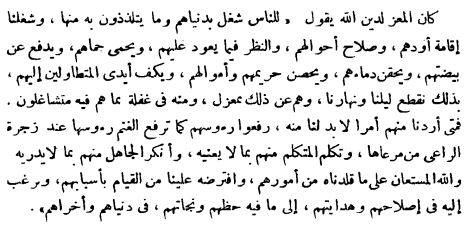
al-Mu'izz would say: "people are busy with their worldly matters and how to enjoy themselves in it whereas we busy ourselves with establishing what pleases them, making their conditions good and right, looking at what they need, protecting them collectively, their land, their life, their women and their property; reaching out towards them. And with that we spend our days and nights whereas they are discharged from that. Others are heedless of what they themselves are preoccupied with. Whenever we want a necessary and important matter from them, they lift their heads like sheep do when the shepherd calls them in the pastures. Some among them speak with what does not concern them and others, ignorant, reject what they do not understand. So, may God be our helper in His entrusting us with the duty of looking after their affairs and obligating us to establish all their needs and in encouraging them to rectify their condition and draw them towards guidance related to their prosperity and success - in this world and the next."
Source:al-Qadi al-Nu'man, al-Majalis wa'l-Musayarat, vol.1, pp.143-144.
ولا أعلم ولا سمعت أحدا وصف بمثل ذلك من الصبر وسعة الصدر
"I do not know nor have I heard of anyone described with such patience..."
Source:al-Qadi al-Nu'man, al-Majalis wa'l-Musayarat, vol.2, p.37.
For some outlines on al-Qadi Nu'man, see the links below:
al-Qadi al-Nu'man (ismailimail.wordpress.com).
al-Qadi al-Nu'man (iis.ac.uk) with the pdf here.
al-Qadi al-Nu'man (ismaili.net).
Conquest of Egypt:
On the conquest of Egypt and the establishment of Cairo, see the online resources here, here, here and here.
 ATL Activities: General Jawhar and Conquest of Cairo
Impact and Achievements:
Some of al-Mu'izz's achievements included the following:- Unification of the Fatimid domains East and West leading them to transform from a dynasty into a Mediterranean empire.
- The conquest of Egypt, establishing a new capital and regional power base - Cairo.
- Cultural and theological renaissance leading to the spread and development of Ismaili thought.
- Under his rule, the oldest Islamic university was established, al-Azhar in Cairo.
- Coptic Christians gained a high degree of autonomy and influence within the Fatimid administrations and Coptic new year celebrations were permitted to be performed openly.
Sources:
1: Bab al-Futuh ('The Victory Gate'), Cairo: One of the three remaining Fatimid gates to the city of Cairo.

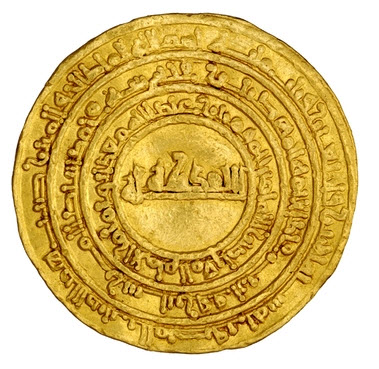
2. A dinar coin of al-Mu'izz struck in Mansuriyya:
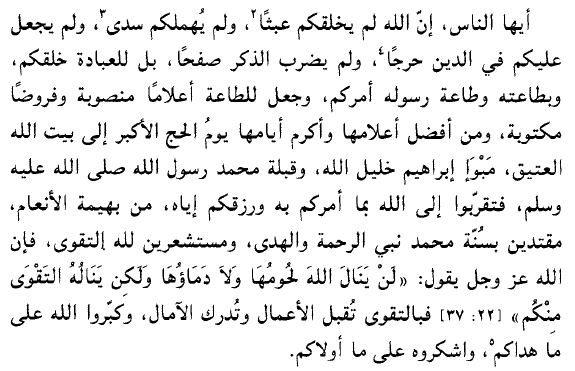
3. An excerpt from the Friday Khutba (sermon) delivered by al-Mu'izz as cited in al-Jawdhari, Sirat Jawdhar, pp.76-84 and Idris, ʿUyun al-Akhbar (ed. Yaʿlawi), pp.541–548, tr. by P. E. Walker from Orations of the Fatimid Caliphs: Festival Sermons of the Ismaili Imams (London-New York: I. B. Tauris & Co, 2009):
p.34 (Arabic text):
p.127-128 (English trans):
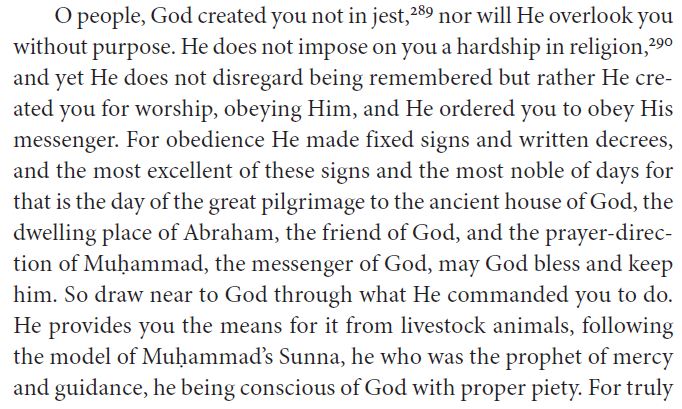

* = sunna is an Arabic word meaning the Prophet Muhammad's practical guidance.
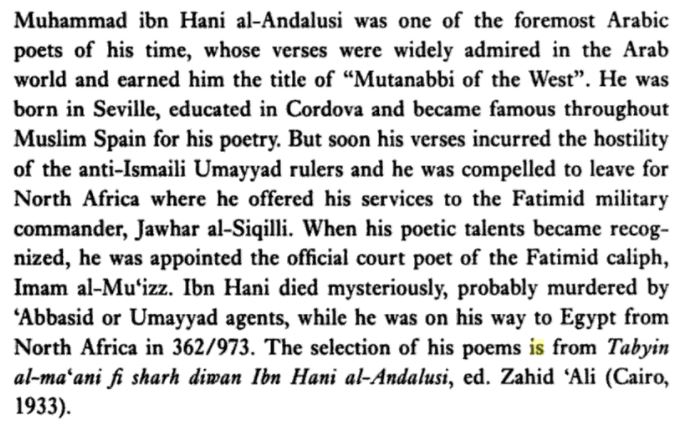
4. A panegyric composed for the caliph-imam al-Mu'izz li-Din Allah by the famous Andalusian poet Ibn Hani (d.362/973):
"THE PROOF OF GOD"


You run with the light of God
among His servants so that you
may illumine their hearts
and shine therein as His proof.
Our eyes have observed your
brilliance, but in fact
opinion has never understood
the essence of your reality.
I fear you with a reverence,
lest the sun forgets its rising,
just as your remembrance made
the angels forget their praise.
You are the Spirit because
your image is shaped from
the spiritual world of your Lord
and supported by knowledge.
I swear that if the world did
not call you a caliph,
they would certainly have
called you a second Messiah.
Source: Arabic text fromTabyin al-Ma'ani fi Sharh Diwan Ibn Hani al-Andalusi, ed. by Z. 'Ali (Cairo: Matba'at al-Ma'arif, 1932), pp.160-161; English tr. from Shimmering Light: An Anthology of Ismaili Poetry (London-New York: I. B. Tauris, 1997), tr. by F. M. Hunzai and K. Kassam (reproduced online here).
5. A summary acheivement of al-Mu'izz as recounted by the chief Judge within the Fatimid kingdom at the time and founder of the Ismaili jurisprudence, al-Qadi al-Nu'man (d.363/974) from his surviving work on Ismaili origins Iftitah al-Da'wa, tr. by H. Haji, Founding the Fatimid State: The Rise of an Early Islamic Empire (London-New York: I. B. Tauris & Co, 2006), pp.233-234:
(Al-Muʿizz) assumed the imamate after him, following in his footsteps and in the footsteps of his forefathers. Just like al-Mansur, he showed patience at his bereavement and endured his loss which he continued to bear thereafter. He assumed the burdens of the caliphate in the aftermath of general dissension, at a time when the outlying regions of the kingdom were in a state of revolt and routes were insecure. Darkness had not yet dispelled, nor had the flames of the fire of dissension subsided. The chiefs of the tribes who had provoked the war and kindled its fire remained entrenched in their hideouts in the mountains and the outlying regions.
Al-Muʿizz li-din Allah set out to fight them immediately after God conveyed to him the caliphate. God caused them to descend from their fortresses and struck terror in their hearts. They came to him seeking his arbitration over themselves, entrusting their affairs to him. He pardoned them, following the policy of his father, and brought them all the stability of his dominion. The war was over, its smoke abated and its fire was extinguished. Routes became safe and fear subsided. People calmed down and felt secure. God reconciled the hearts of His servants through him and put an end to the causes of corruption. The outlying regions and the tribes all submitted to him, whether close or far away and near or remote.
6. An Indian sub-continent style depiction of the Fatimid caliph-Imam al-Mu'izz li-Din Allah:

ATL Activities:
ATL Skill: Research and Thinking Critically
al-Mu'izz and Historical Bias
Below is an excerpt from the notable Sunni Egyptian historian and polymath Taqi al-Din Ahmad b. ‘Ali al-Maqrizi (d.1442) who candidly discusses the biases embedded in the reports of “eastern historians” (intending the Iraqi and Syrian historians) regarding the Fatimid ruler al-Mu’izz.
On an in depth account of al-Maqrizi's life, read the article in the link below:

Read the excerpt and answer the questions that follow:
قال مصنفه رحمة الله عليه : ليس الأمر كما قال ابن الأثير، فقد حكى الفقيه الفاضل المؤرخ أبو الحسن بن إبراهيم بن زولاق المصري في كتاب سيرة المعز وقد وقفت عليها بخطه رحمه الله أخبار المعز منذ دخل مصر إلى أن مات يوماً يوماً، وأن المعز إنما عهد لابنه يوم الخميس لأربع عشرة بقيت من شهر ربيع الآخر قبل موته بيومين؛ وذكر أن سبب العهد إليه اجتماع الناس بباب القصر وكثرة الرقاع، وأنه سئل فيمن ينظر في ذلك، فأمر ابنه نزار العزيز أن ينظر فيه فاستخلفه؛ وقد ذكرت ملخص هذه السيرة فيما مر من أخبار المعز؛ وأن ابن زولاق أعرف بأحوال مصر من ابن الأثير خصوصاً المعز، فإنه كان حاضراً ذلك ومشاهداً له، وممن يدخل إليه ويسلم مع الفقهاء عليه، ويروى في هذه السيرة أشياء بالمشاهدة، وأشياء مدته بها ثقات الدولة وأكابرها، كما هو مذكور فيها؛ إلا أن ابن الأثير تبع مؤرخي العراق والشام فيما نقلوه، وغير خاف على من تبحر في علم الأخبار كثرة تحاملهم على الخلفاء الفاطميين وشنيع قولهم فيهم، ومع ذلك فمعرفتهم بأحوال مصر قاصرة عن الرتبة العلية، فكثيراً ما رأيتهم يحكون في تواريخهم من أخبار مصر ما لا يرتضيه جهابذة العلماء، ويرده الحذاق العالمون بأخبار مصر؛ وأهل كل قطر أعرف بأخباره، ومؤرخو مصر أدرى بماجرياته، وفوق كل ذى علم عليم.
The author [al-Maqrizi], may God have mercy on him, says, the matter is not as Ibn al-Athir* has mentioned, for the esteemed Egyptian legist and historian Abu ’l Hasan b. Ibrahim b. Zulaq, may God have mercy upon him, has related in his work, Kitab Sirat al-Mu‘izz,** and which I have read in his own hand writing, a day-to-day account from the time when al-Mu‘izz entered Egypt until he passed away
[...]
Ibn Zulaq was better informed than Ibn al-Athir about events in Egypt, particularly those concerning al-Mu‘izz, as he was present and witnessed them, being as he was among those who came into his [al-Mu‘izz’s] presence and greeted him... He narrates the events he witnessed and the matters reported to him by high-ranking and trustworthy members of the state as mentioned in it [the Sira].
Ibn al-Athir, on the other hand, has based his information on the Iraqi and Syrian historians. It is clear to those who have delved into the sciences of his day that the latter are much prejudiced against the Fatimid caliphs and say abominable things about them, despite the fact that their knowledge of the conditions in Egypt is extremely limited. Often, I have seen them relating in their histories, events in Egypt, stories which are not accepted by intelligent scholars and rejected by those skilled and informed about the history of Egypt. The people of each region know best about their own events, and so the Egyptian historians know best about what took place there.
* = one of the most famous 13th Century Sunni historians originally from Iraq (Mosul) who later settled in Syria (Damascus and Aleppo). Originally part of Saladin's army and was pro-Ayyubid.
** = trans. as: 'The Book on the Life of al-Mu'izz'.
Source: al-Maqrizi's Itti‘az al-Hunafa’ bi-Akhbar al-A’imma al-Fatimiyyin al-Khulafa' (Cairo: Egyptian Ministry of Endowments for Religious Affairs, 1996), vol.1, p.232; tr. From S. Jiwa, “Historical representations of a Fatimid Imam-caliph: Exploring al-Maqrizi’s and Idris’ writings on al-Mu‘izz Li Din Allah”, British Alifba: Studi Arabo-Islamici e Mediterranei, Vol XXII, fn.30.
Questions:
1. What can you as a historian learn from al-Maqrizi's excerpt about the way history is recorded or produced? Discuss.
2. Why might Sunni historians living in Iraq and Syria depict Fatimid rulers in the way al-Maqrizi has described? (think about Fatimid expansionist ambitions and the Abbasids political rivalry). Discuss.
3. "The people of each region know best about their own events". To what extent do you agree with this statement? (15 marks)
For the 15 mark question format and style, see the essay writing guide for paper 3 at Essay writing for Paper 3.
For questions 1 & 2, you may wish to write down your answers.
ATL Skill: Thinking Critically
"Universal Ruler"
Al-Maqrizi mentions the declaration by al-Mu’izz’s general al-Jawhar to the people of Egypt on taking the city of Cairo in 969. The declaration requests an amnesty policy assuring the inhabitants that al-Mu’izz’s intentions are noble and that he has arrived as a liberator from prior rulers and urges them to submit to him as caliph. One part of the declaration reads:
ولكم علي الوفاء بما التزمته، وأعطيتكم إياه، عهد الله، وغليظ ميثاقه وذمته، وذمة أنبيائه ورسله، وذمة الأئمة موالينا أمراء المؤمنين قدس الله أرواحهم ، وذمة مولانا وسيدنا أمير المؤمنين المعز لدين الله صلوات الله عليه فتصرحون بها وتعلنون بالانصراف إليها، وتخرجون إلي وتسلمون علي، وتكونون بين يدي…
“And I take it upon me to fulfill what I have committed myself to give you – the ʿahd or pact of God and His inviolable covenant, together with His dhimma or protection, and that of his Prophets and Messengers; the protection of the Imams our lords, the Commanders of the Faithful, God bless their souls, and that of our lord and master the Commander of the Faithful, al-Muʿizz li-Din Allah, the blessings of God be upon him. And you in turn shall act openly in accordance with his dhimma, coming out and submitting to me and being under my authority.
Source: al-Maqrizi, al-Itti’az al-Hunafa', vol.1, p.152, tr. by M. Brett in “Al-Karaza al-Marqusiya: The Coptic Church in the Fatimid Empire” in Egypt and S
 Twitter
 Facebook
 LinkedIn