
 IB Docs (2) Team

2. Stalin's rule (1941 - 1953) (ATL)
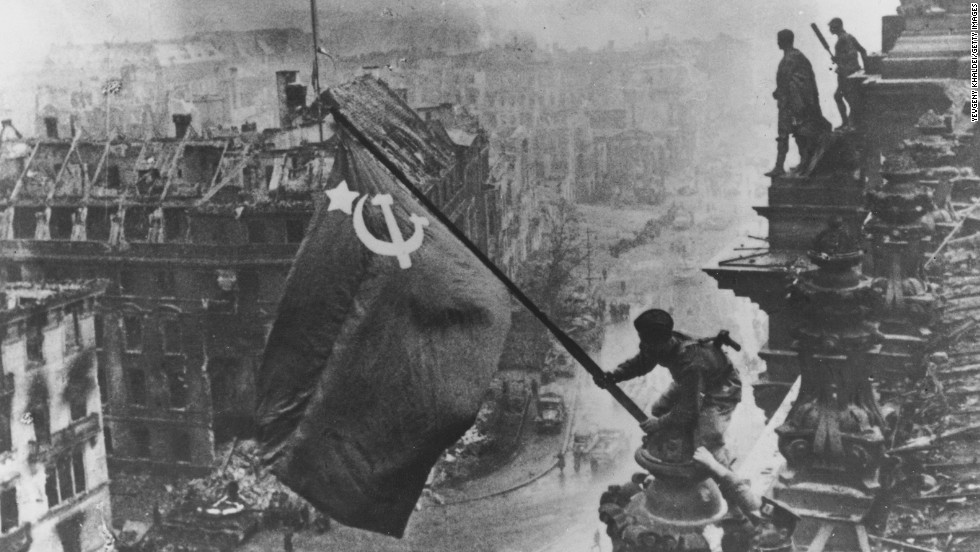
The Nazi invasion of the USSR - Operation Barbarossa - was initially very successful. However, following the Battle of Stalingrad, the Soviets were able to force the Nazis to retreat. This page examines the reasons for the Soviet success in defeating the Nazis, and also the impact that this had on the Soviet Union following the end of the war.
Videos and teaching ideas for using the videos in class are covered on separate pages; 8. The Soviet Union and Russia: Videos and activities.
Guiding questions
Why did Stalin make an alliance with Hitler in 1939?
Why was the Soviet Union able to survive and push back the Nazi invasion?
What economic developments took place after 1945?
What political developments took place after 1945?
Why did a 'cold war' develop with the West after 1945?
1. Why did Stalin make an alliance with Hitler in 1939?
The syllabus states that you need to know the impact of the war on USSR but does not specifically state that you need to know Stalin's foreign policy leading up to the war. However, it is hard to understand the impact of the Nazi invasion without appreciating the build up to the war and, crucially, Stalin's decision to side with Hitler rather than with the West.
Task One
ATL: Thinking and research skills
1. In pairs research the following events in Europe. Write a couple of lines to say what happened and then a few lines to explain how the event impacted on the Soviet Union
- Hitler becoming Chancellor of Germany in 1933 (note Hitler's attitude towards Communism and land to the east of Germany)
- Japan's actions in Manchuria from 1933
- The actions of Britain and France during the Spanish Civil War
- Anti-Comintern Pact of November 1936
- The Munich Agreement of 1938 between Britain and Nazi Germany
2. How do these events help explain why Stalin signed an agreement with Nazi Germany?
3. What domestic factors also would have encouraged Stalin to make an alliance with Hitler rather than an alliance with the West?
Task Two
ATL: Thinking skills
Read the terms of the Non-Aggression Pact of 1939 below. It can also be found here
1. What advantages did Stalin gain from signing this Pact?
2. Why are the secret clauses particularly significant?
3. How do the terms of this pact further help to explain why Stalin signed an agreement with the Germans rather than with the West?
The Government of the German Reich and The Government of the Union of Soviet Socialist Republics, directed by the wish to strengthen the cause of peace between Germany and the USSR . . . have reached the following agreement:
Article 1: The two contracting parties undertake to refrain from any act of violence, and aggressive action, or any attack against one another, whether individually or jointly with other powers.
Article 2: In case the contracting parties should become the object of warlike acts on the part of a third party, the other contracting party will no longer support that third power in any form.
Article 3: Neither of the two contracting parties will participate in any grouping of powers which is indirectly or directly aimed against the other party.
Article 4: Should disputes or conflicts arise between the contracting parties regarding questions of any kind whatsoever, the two parties would clear away these disputes or conflicts solely by means of friendly exchanges of views or if necessary by arbitrary commissions.
Secret Additional Protocol: On the occasion of the signature of the Non-Aggression Treaty between the German Reich and the Union of Soviet Socialist Republics, the undersigned... parties discussed in strictly confidential conversations the question of the delimitation of their respective spheres of interest in Eastern Europe. These conversations led to the following result:
In the event of a territorial and political transformation in the territories belonging to the Baltic States (Finland, Estonia, Latvia, Lithuania), the northern frontier of Lithuania shall represent the frontier of the spheres of interest both of Germany and the USSR. . . .
In the event of a territorial and political transformation of the territories belonging to the Polish State, the spheres of interest of both Germany and the USSR shall be bounded approximately by the line of the rivers Narev, Vistula, and San.
This Protocol will be treated by both parties as strictly secret.
2. Why was the Soviet Union able to survive and push back the Nazi invasion?
http://www.english-online.at/history/world-war-2/operation-barbarossa-and-the-battle-of-stalingrad.htm
1. Watch the video Battlefields: Stalingrad
As you watch the video write down notes on all the reasons that contributed to the Soviet victory over Nazi Germany.
2. Create a mind map or table to show the reasons for the Nazi victory over the Soviets. (You could organise this with the headings 'Soviet strengths' and 'Nazi weaknesses'.)
Click on the eye below to check that you have all of the points.
The Nazis were not prepared for a long campaign and suffered from a lack of supplies
They also lacked winter clothing and equipment
Hitler took control of the army in 1941 which had a disastrous effect on the conduct of the war
The German attacks on the civilian population alienated the Russians against them and made resistance stronger
The supply lines of the Germans became overstretched
The Germans were unable to replace their losses of tanks and armoured vehicles fast enough
The Soviets were producing large numbers of tanks and artillery; factories were moved east of the Ural mountain range when the invasion took place and this allowed production to keep going
The air force was also reformed and there was co-ordination between ground and air forces
The Soviets had excellent commanders, such as Zhukov, and Stalin gave them the freedom to make strategic decisions. This was unlike Hitler who gave his commanders no freedom of action
The Russians were motivated by patriotism and fighting for the 'motherland'; propaganda stressed traditional Russian values rather than those of communism
Stalin stayed in Moscow and this motivated people
The centralised nature of the Soviet State allowed for effective planning
The Allies sent help to the Soviet Union
Note that David Reynold's documentary Man of Steel is also excellent for Stalin's role in the Second World War: The Soviet Union and Russia: Videos and activities
Task Two
ATL: Thinking skills
Read the following radio broadcast from Stalin which was made on 3 July 1941 and discuss the following questions in pairs:
- What can you learn from this source about the nature of the war in the Soviet Union?
- What methods does Stalin use to motivate the Soviet population? Comment on the language that is used.
- With reference to origin, purpose and content what are the value and limitations of this source for a historian studying the impact of the war on the Soviet Union.
In consequence of this war which has been forced upon us, our country has come to death grips with its bitterest and most cunning enemy - German fascism. Our troops are fighting heroically against an enemy armed to the teeth with tanks and aircraft. Side by side with the Red Army, the entire Soviet people is rising in defense of our native land.
The enemy is cruel and implacable. He is out to seize our lands watered by the sweat of our brows, to seize our grain and oil secured by the labour of our hands. He is out to restore the rule of the landlords, to restore tsarism, to destroy our national cultures and our national existence and to turn us into slaves of German princes and barons. Thus the issue is one of life and death for the Soviet State, of life and death for the peoples of the USSR.
In case of a forced retreat of Red Army units, all rolling stock must be evacuated, the enemy must not be left a single engine, a single railway carriage, not a single pound of grain or gallon of fuel. The collective farmers must drive off all their cattle and turn over their grain to the safe keeping of the state authorities for transportation to the rear. All valuable property including non-ferrous metals, grain and fuel that cannot be withdrawn must be destroyed without fail. In areas occupied by the enemy, guerilla units mounted and on foot must be formed. Sabotage groups must be organised to combat enemy units, to blow up bridges and roads, damage telephone and telegraph lines, set fire to forests, stores and transports. In occupied regions conditions must be made unbearable for the enemy and all his accomplices. They must be hounded and annihilated at every step, and all their measures frustrated.
Task Three
ATL: Research and communication skills
Divide the class into groups. Each group should take one of the following aspects of the Second World War in the Soviet Union. Each group should then prepare a presentation to the rest of the class on their topic; this should include maps, images, primary sources and any relevant (short) video clips.
- The siege of Leningrad (note the award winning documentary on the siege of Leningrad on this page: The Soviet Union and Russia: Videos and activities)
- The Battle of Stalingrad
- The Battle of Kursk
- The impact of the war on the Jews living in the Soviet Union
3. What economic developments took place after 1945?
The economic impact of the war on the Soviet economy was severe. In addition to the massive loss of life (approximately 17 million civilians and over 8 million soldiers died), villages, towns and cities had been destroyed in those areas that had been occupied by the Germans. In addition 100 000 collective farms with their livestock and machinery had been destroyed. Railways, factories, mines... almost 70% of the Soviet Union's industrial production had been lost. Thus in some parts of the country it was like rebuilding the economy from scratch. However, Lowe writes, 'the victory was seen by Stalin as the ultimate vindication of his entire system of government, which had passed the sternest test imaginable - total war'. (N Lowe, Mastering Modern World History)
Task One
ATL: Thinking skills
Read the extract below. What were the characteristics of life for Soviet people after the war?
In 1946, Stalin announced the first of three five year plans. Yet again the focus was on heavy industry and transport. Many more women now had to work in the factories due to the huge loss of soldiers in the war and there was no let up on the hours and sacrifices demanded of workers; conditions remained as they had during the war - 12 hours a day in a six day week and rationing continued at starvation levels. As in the 1930s workers were encouraged with a range of methods that included wage differentials and encouraging workers by awarding 'Stakhanovites'. A nationwide drought in 1946 made conditions even harsher. In these conditions, the results of the 4th Five year Plan are quite remarkable. However the living and working conditions of workers remained as bad as ever; by 1950 the USSR had substantially improved its industry but consumer goods remained in short supply. In agriculture, the loss of collective farms meant that the peasants faced particular hardships; with strict controls over all aspects of their lives, they were reduced to almost serf status again. Targets for grain production which had to be handed over were so high that peasants often had to buy their flour and foodstuffs in towns. Wages remained at less than 20% of the level of wages of industrial workers and taxes increased making it difficult for families to survive. All private plots were taken away.
4. What political developments took place after 1945?

Starter activity
What is the message of this photo?
A meeting held in a factory in Leningrad on the announcement of Stalin's death
The success of the war further strengthened Stalin's position and increased the intensity of the cult of Stalin. However, Stalin became even more paranoid and top communists in the party and even his own family members were arrested. The Russian historian, Yuri Levada, has described the years 1945 - 53 as a period of 'hysterical isolationism'. The number of prisoners in labour camps in 1953 was almost 2.5 million. Another 2.75 million languished in settlements in Central Asia and Siberia.
Note that the video on Stalin's Terror here deals effectively with the impact of the Terror on Stalin's family in his final years.
Task One
ATL: Research skills
in pairs research and make brief notes on the following aspects of Stalin's last years:
- Lysenko and his impact on agriculture
- The fate of returning Red Army soldiers and prisoners of war
- The character and actions of Beria who was head of the NKVD during this period
- Zhdanov and the purge of the arts
- The Leningrad Affair
- The Doctors' Plot
Note that there is a graded essay on the Soviet Union 1945 - 1953 on this page: The Soviet Union and Russia, 1924 - 2000: Graded student examples.
5. Why did a 'Cold War' develop with the West after 1945?
“Stalin’s postwar goals were security for himself, his regime, his country, and his ideology, in precisely that order.”
― John Lewis Gaddis, The Cold War: A New History
Stalin's paranoia at home was also a factor in the developing Cold War with the West as he sought to ensure that the Soviet Union would be secure; this of course meant control over Poland and other east European states. This went against what the West wanted and what had been agreed upon at the Yalta Conference at the end of the war; thus from 1945-1946, a 'Cold War' developed with the West. Although you do not need to know about the development of the Cold War with the USA after 1945 in detail and the way in which the Soviet Union gained its satellite states, it is important to understand the context of this international situation as it impacted on Stalin's domestic policies and is key for understanding the foreign policies of Khrushchev and Brezhnev (which are on the syllabus).
For activities on why the USA and the USSR emerged as superpowers and on development of the Cold War after 1945, refer to 1.1 Theme 1 - Rivalry, Mistrust and Accord (ATL) on the Cold War for Paper 2.
 Twitter
 Facebook
 LinkedIn