
 IB Docs (2) Team

3. Impact of Tanzimat reforms
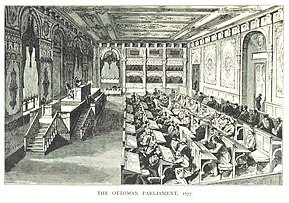
Despite progressive intentions, the policy of reform in the form of Tanzimat ultimately failed to save the Empire. The Turkish historian, Zeynep Çelik has written, "In summary, from 1838 to 1908 the Ottoman Empire staged its final but doomed struggle for survival.'
The reforms of the Tanzimat period were attempts to keep an empire alive in the midst of European and industrialisation.
What, according to these sources were the weaknesses of the Tanzimat reforms?
Source A
The conflict [in Bosnia] highlights one of the Tanzimat's central weaknesses, one that helped reinforce contemporary western perceptions that the reform was merely an oriental ruse, and not, as was actually the case, a serious attempt to rejuvenate the ailing Empire. The reformers devised all manner of projects that left bold imprints throughout the Empire. But the key issue of agrarian relations was barely addressed. These deteriorated steadily, and the misery for the Christian peasantry in Bosnia increased. Over the next twenty years, the territory would be tormented by spontaneous rebellions..the fundamental cause of peasant grievances, the feudal labour obligations was never tackled by any reformers from Istanbul'
Misha Glenny, Balkans 1804 - 1999, 1999, pg 84
Source B
Throughout the period, European economic penetration of the Middle East acquired a new, more pervasive dimension. Added to the earlier sale of arms and other manufactured products was the provision of huge amounts of capital investment and easy access to credit. As the local reformers struggled to finance their projects, European banks and financiers stepped forward with loans that initially seemed favourable. However, these loans became the Achilles' heel of the reform movement, and the accumulation of indebtedness led directly to the British occupation of Egypt and to loss of economic sovereignty in the Ottoman Empire'
Cleveland and Bunton, pg 76
Source C
Both the political and economic measures of the reform leaders proved futile in the long run. In matters of politics, the "men of the Tanzimat" were hampered by their class origins. They were themselves the children of the older Ottoman ruling class, and therefore were unwilling to push reforms to their logical conclusion, which would have imperilled the estates and revenues of parents or relatives. Also, the reform leaders had been educated in European ways, which made them Europeans in dress, in manners and in spirit. This .... led them to scorn or ignore the illiterate village masses. They considered themselves as Ottoman gentlemen, and they not only wore different clothes and affected different manners, but even spoke a different literary form of Turkish that was far removed from the purer but cruder idiom of the typical Anatolian Turkish peasant. The latter were referred to by the Constantinople gentlemen-officials as Kaba Turk or rough Turk and Eshek Turk or Donkey Turk. This attitude was fully reciprocated, which explains why Sultan Abdul Hamid II was able with virtually no opposition to dismiss the reformers in 1877 and to maintain his autocratic regime until 1909.
Stavrianos, Global Rift, "Middle East enters the Third World". pp 207 - 208
Source D
While Tanzimat ushered in badly needed reform, it did so at a high price. Two main negative consequences of Tanzimat set the stage for future Ottoman social and political turmoil. First, the push to Westernize the Ottoman economy, which meant technological modernization and industrialization, required a large amount of capital investment. This investment was provided mostly by the British and the French. European investment, however, came with strings attached, including demands to open markets. Eventually, the Ottoman inability to repay its debts justified Anglo-French control over the empire’s finances. Second, modernization directly attacked the Muslim base of the empire and thus weakened the empire’s legitimacy as the primary guardian of Islamic heritage. We will see that when the empire made the call for holy war during WWI, it was met largely by deaf ears. Tanzimat, in other words, created divisions in Ottoman society between an elite Westernizing class and the vast majority of average people who had no interest in fundamentally changing their way of life
Seth Rogoff, The Middle East Before 1914: The Ottoman Empire
Read this document which gives an Arab perspective of the failures of the Tanzimat reforms by a Syrian author Abd al-Rahman al-Kawakibi
Answer the questions on the document regarding this perspective of the reforms.
Return to the timeline that you created to show the key events affecting the Ottoman Empire.
Add the internal events of the Empire to this timeline so that you can see the relationship between the external and internal events.
In pairs consider the extent to which the Ottoman Empire was successful in modernising during the Tanzimat reforms.
Create a mind map or other infographic to show the aims of the reforms and the successes and the failures. Use all of the information from the previous page, plus the videos.
Now have a mini-debate. One of you should take the view that the reforms were successful, the other that it was not. You may want to create groups of three so that the third person can 'judge' the debate. The judge needs to give a point for every argument made and an extra point for evidence.
 Teacher only box
Alternatively, prepare a debate style (world schools, British parliamentary) and set students up in appropriate teams.
Give them 15 minutes to review notes and to prepare arguments for the following debate topic:
The Tanzimat reforms did not modernise the Ottoman Empire
 Twitter
 Facebook
 LinkedIn