
 IB Docs (2) Team

5. Opposition to the slave trade and slavery
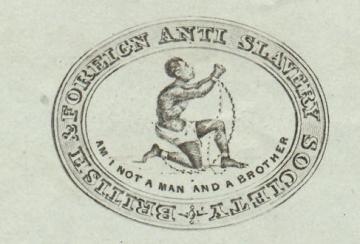 Although there was continued resistance to slavery from slaves themselves, it took much longer for the slave trade and slavery to be challenged by others. Those who did raise concerns were in a minority; too many people benefited from the slave system for concerns to be seriously taken up. Nevertheless, there were always voices questioning this institution and in the late 18th Century the slave system came under increasing attack resulting in the abolition of the slave trade in both Britain and America at the start of the 19th Century.
Guiding questions:
Who were the early opponents of slavery?
What was the role of the Quakers in the abolitionist movement?
Why did the anti-Slavery movement gather momentum in the 18th Century?
Why was the Slave Trade abolished in Britain?
- How significant were the tactics of campaigners?
- What role did women play in the movement for the abolition of slavery?
What was the role of Black Americans and Black Europeans in ending the slave trade?
What was the role of economic factors in ending the British slave trade?
How successful was opposition to slavery in the Americas?
1. Who were the early opponents of slavery?
As you will have seen from the previous pages, slaves continuously carried out opposition against their enslavement through a variety of tactics, including in some instances outright rebellion.
However, only a few Europeans openly challenged the slave trade and this institution before the 18th Century. One of these Europeans was the Spanish thinker Bartolomé de las Casas.
Task One
ATL: Thinking skills
Watch this video and make notes on de las Casas' opposition to slavery. The video is also transcribed on this page
2. What was the role of the Quakers in the abolitionist movement?
One religious group which consistently opposed slavery was the Quakers.
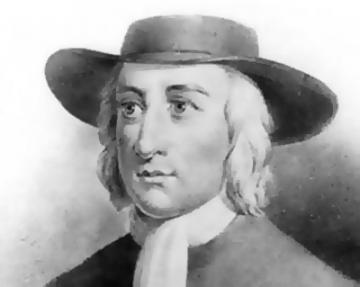 Why did many Quakers have the moral insight to oppose slavery at an early stage? .. Part of the answer seems to lie in the status of Quakers, as dissenters and outsiders.
Dissenters are, on the whole, more naturally disposed to see the moral inadequacies of the society in which they live, particularly if they themselves are persecuted or disadvantaged – as Quakers were for many decades. Indeed, other religious dissenters in the eighteenth century, such as Methodists and Unitarians, were also critical of slavery.
But it is clear we must look to other causes as well, if we are to understand the roots of Quaker opposition to slavery. That opposition was driven by certain values that have long drawn people to Quakerism: the emphasis on equality, opposition to violence (and slavery, after all, is an inherently and profoundly violent institution) and the veneration of liberty of conscience which seems to flow naturally out of the Quaker method of worship.
https://kentquakers.org.uk/quakers-and-the-abolition-of-the-slave-trade-narrative/
'... now I say, if this should be the condition of you and yours, you would think it hard measure, yea, and very great Bondage and Cruelty. And therefore consider seriously of this, and do you for and to them, as you would willingly have them or any other to do unto you...were you in the like slavish condition.'
Quaker, George Fox, 1676
Starter:
What can you learn from the two quotes above about the reasons for Quakers being at the forefront of the anti-slavery movement?
In 1657, the founder of the Quakers, George Fox (see picture and quote above) urged for better treatment of enslaved people. He encountered slavery on his visit to Barbados in 1671 and he advocated that Friends should 'deal mildly and gently' with their slaves, and that 'after certain years of servitude they should make them free'. Another Quaker William Edmundson was more outspoken and condemned slavery outright. The results was that, in 1727, the London Yearly Meeting formally minuted its censure of Friends dealing in slaves.
From the 1750s, a number of Quakers in the American colonies began to oppose enslavement. They visited the slaveholders and lobbied the English Headquarters for action. By 1761, Quakers had come to view abolition as a Christian duty and all Quakers, on both sides of the Atlantic, were barred from owning slaves. Any members who did not conform were disowned.
In 1783 the 'London Society of Friends' yearly meeting presented a petition against the slave trade, signed by nearly 273 Quakers, to Parliament.
Task One
ATL: Thinking skills
Read the Petition which was submitted to the British Parliament by the Quakers in 1783. How do the Quakers try to convince the House of Commons to end the Slave trade? (Comment on arguments and language used.)
To the Commons of Great Britain, in Parliament assembled.
The Petition of the People called Quakers,
Sheweth -
That your Petitioners met in this their annual assembly, having solemnly considered the state of the enslaved negroes, conceive themselves engaged in religious duty, to lay the suffering situation of that unhappy people before you, as a subject loudly calling for the humane interposition of the Legislature.
Your Petitioners regret, that a nation professing the Christian Faith, should so far counteract the principles of humanity and justice as by a cruel treatment of this oppressed race, to fill their minds with prejudices against the mild and beneficent doctrines of the Gospel.
Under the countenance of the laws of this country, many thousands of these our fellow-creatures, entitled to natural rights of mankind, are held, as personal property, in cruel bondage; and your Petitioners being informed, that a Bill for the regulation of the African trade is now before the House, containing a clause which restrains the officers of the African Company from exporting Negroes. Your Petitioners, deeply affected with a consideration of the rapine, oppression, and bloodshed attending this traffic, humbly request that this restriction may be extended to all persons whatsoever, or that the House would grant such other relief in the premises, as in its wisdom may seem meet.
Signed in and on behalf of our yearly meeting, held in London, the 16th day of 6th month, 1783.
Task Two
ATL: Thinking and Research skills
An early Quaker abolitionist was Benjamin Lay. This short video on his life will give you a clearer idea of the views of Quakers as well as the actions of this particular abolitionist. Watch the first five minutes.
2. Research other Quaker abolitionists in Britain and in America:
William Southeby, who, in 1696, demanded a ban on slave ownership and importation
John Woolman who, in 1754, published one of the first tracts opposing slavery
James Wright of Haverhill, one of the first British businessman to refuse to sell slave-processed sugar.
Antony Benezet, a Philadelphia schoolteacher who had a profound influence on the abolitionist movement in both the US and Britain.
A key moment in the fight to stop the slave trade took place was the formation of the first anti-Slavery society - The Society for Effecting the Abolition of the Slave Trade (SEAST), founded in May 1787. Nine of the founding members were Quakers; the other three were Anglicans. The nine Quakers, as non-conformists, were prevented from standing for Parliament and so the presence of the three Anglicans (the official religion of England whose Bishops were in Parliament) in the Society meant that that the committee had more chance of gaining the support of the UK Parliament in their efforts.
3. Why did the anti-Slavery movement gather momentum from the late 18th Century?
'In the late eighteenth century, most Atlantic salve owners and slave traders felt confident that they could ride out any criticism of slavery; by the late nineteenth century they had all vanished and only an eccentric would have felt confident to defend slavery publicly in the West'
James Walvin, Resistance, Rebellion and Revolt, 2019, pub. Robinson
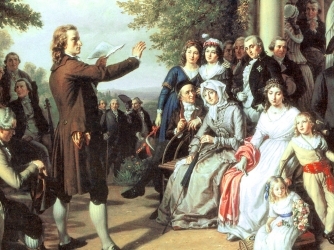 In the 18th Century, The Enlightenment movement saw new ideas emerging. Enlightenment thinkers in Britain, in France and throughout Europe questioned traditional authority and embraced the idea that it was possible for humanity to improve through rational change.
People started to move away from traditional ideas dominated by the dikats of the Catholic Church to discussions on liberty, rights and the nature of humanity. Wedgewood's image (see below) captured this new emphasis that 'all men are born equal' - a key idea underpinning the new American and French constitutions which followed on from their revolutions.
It is clear that many enlightenment thinkers did not in fact see slaves as equal; however abolitionists were undoubtedly taking their lead from the new thinking. Many of the new anti-Slavery leaders who emerged in the 18th Century were members of Protestant sects - many considered as 'nonconformists' - who rejected the previous emphasis on the Old Testament evidence for supporting slavery and were prepared to re-interpret the Bible focusing on the message of the New Testament and that there should be 'goodwill to all men'. As Herbert Klein writes, 'For the first time in western European thought, there now emerged a widely disseminated set of beliefs that held slavery, and even more so the slave trade, to be a morally, politically, and philosophically unacceptable institution for western Europeans.'
Other key changes were taking place in society making slavery less acceptable. Britain became a leader in the anti-Slavery movement at the end of the 18th Century and the impact of changes in British Society is explained by Walvin in the source below.
Task One
ATL: Thinking skills
Read the source below from James Walvin. What does he argue explains the support for the anti-slavery movement? How many of his points do you think are linked to the influence of The Enlightenment?
Yet if slavery was wrong/immoral/unChristian in 1807, why not in 1707? What had changed was not slavery and the slave trade (both buoyant and booming in the years before 1807), but Britain itself. There had been a shifting of the tectonic plates underpinning British life, a shift which produced major changes in sensibility and attitudes. New forms of religious dissent, a more literate populace, the impact of democratic ideals, all and more laid the basis for popular abolitionism (itself made easier in an urbanizing, literate society). In 1807 it was widely accepted that opinion had flowed upwards, not downwards. In the words of the Edinburgh Review, 'the sense of the nation has pressed abolition upon our rulers'.
James Walvin
https://archives.history.ac.uk/history-in-focus/Slavery/articles/walvin.html
4. Why was the Slave Trade abolished in Britain?
Britain led the way in officially abolishing the slave trade, passing an Act to abolish it in 1807. But why was this, especially given that Britain dominated the slave trade and many British people had grown extremely wealthy through the slave trade? And why was it at this time and not earlier?
As you have seen above, the role of religious groups, in particular those of the Quakers was key alongside the highly effective campaigning tactics of others who wanted to abolish slavery - including ex-slaves such as Equiano. However, external factors such as the modernising ideas of The Enlightenment, the impact of the French Revolution - and later, British rivalry with Napoleon were also significant. Alternatively, some historians have argued that the slave trade only ended when it was no longer seen to be important to economic growth.
Task One
ATL: Thinking skills
Watch the following video, which is in two parts. This documentary gives an excellent overview of the abolition campaign in Britain and the internal and external factors which influenced its success.
Answer the questions below as you watch the video (click on the eye). The questions start from 7 minutes in. (You may, however, want to watch the first 7 minutes to review the impact of slavery on British society and economy.)
- Which groups of people were the first in British society to want to abolish slavery?
- What factors were encouraging criticism of slavery at this time?
- What arguments did James Ramsey use to convince people that slavery was wrong?
- What did Thomas Clarkson claim in his thesis?
- Why was it unlikely at this time that the abolitionists would be successful in their aim of abolition slavery?
- What kind of strategies were used to achieve their aims?
- How did the Black community influence the abolition movement?
- What was William Wilberforce’s view on slavery?
- How did he try to convince the House of Commons (in the British Parliament ) of his views?
- Which groups opposed the abolitionists?
- Which two events halted the movement in the 1790s?
Part Two
- Why was there a rebellion in St Domingue?
- What was the impact of this rebellion on the abolitionists?
- What was the nature of the ‘counter-revolution’?
- Why was the government reluctant to abolish the slave trade at this time?
- What kind of arguments were given against abolishing the trade?
- What ‘stroke of luck’ took place?
- How do the abolitionists now turn the St Domingue rebellion to their advantage?
- What impact did the defeat of Napoleon’s forces in St Domingue have on the abolitionist movement?
- Why could abolitionism now be seen as patriotic?
- What was the significance of the Foreign Slave Trade Act of 1806?
- What was the key factor in allowing abolition to be passed?
How significant were the tactics of campaigners?
'Some had them inlaid in gold on the lid of their snuff boxes. Of the ladies, several wore them in bracelets, and others had them fitted up in an ornamental manner as pins for their hair. At length the taste for wearing them became general, and this fashion, which usually confines itself to worthless things, was seen for once in the honourable office of promoting the cause of justice, humanity and freedom."
Thomas Clarkson, a key member of SEAST, explaining the impact of Wedgewood's image seen to the left. (Note that this image has been criticised in recent decades for depicting enslaved Africans as passive and deferential and ignoring the resistance of enslaved and formerly enslaved people.)
The tactics used by The Society for Effecting the Abolition of the Slave Trade (SEAST) were highly effective in gaining British public support for ending the slave trade and can be seen as the first example of pressure group politics.
Task One
ATL: Thinking skills
Read the extract below and refer to the quote above. What tactics were used by SEAST to gain public support?
The first task facing the SEAST, therefore, was to create a constituency for anti-slavery; in effect, to turn an idea (that the slave trade was wrong) into a social movement that would mobilise thousands of Britons. An important lead came from Thomas Clarkson, one of the founding members of the SEAST, who on his various tours of Britain worked assiduously to raise public awareness of the horrors of the slave trade. The nearest thing at this period to a full-time professional reformer, Clarkson was also the author of An Essay on the Slavery and Commerce of the Human Species (1786), one of the foundational texts of the early abolitionist movement. At the same time, the SEAST harnessed a wide range of opinion-building techniques, among them advertising, public meetings, letter writing, and the circulation of books and pamphlets. They also gave the movement an important visual identity, most memorably through Josiah Wedgwood’s image of a kneeling enslaved man, together with the motto ‘Am I Not a Man and a Brother’.
https://www.bl.uk/restoration-18th-century-literature/articles/abolition-of-the-slave-trade-and-slavery-in-britain
The Society was supported in the House of Commons by William Wilberforce. Wilberforce first introduced a Bill to end the slave trade in 1791 when it was defeated by 163 votes to 88. However he continued to keep the issue of slavery before the House of Commons - introducing a motion in favour of abolition every year.
Task Two
ATL: Thinking skills
According to this source, why was the Society so effective?
It has been suggested, quite reasonably, that the contribution of the society, and especially its London committee, has been overlooked by historians. In fact the society had several accomplishments to its credit. It brought together a large number of articulate and influential people to support a cause that, though attracting increasing sympathy, still lacked formal organization. It facilitated co-operation between individuals who, on most other public issues, were mutually opposed. Its successors, notably the Society for the Mitigation and Gradual Abolition of Slavery, formed by Sharp, Clarkson, and Thomas Fowell Buxton in 1807, and the Anti-Slavery Society of 1823, owed much to its methods of proceeding. Not only did it prepare the ground for the mass campaigning that some historians believe was central to the achievement of abolition (Drescher, chap. 5), but it encapsulated a significant national mood, illuminating the changing intellectual and social currents of later eighteenth-century British society.
G. M. Ditchfield
https://www.oxforddnb.com/view/10.1093/ref:odnb/9780198614128.001.0001/odnb-9780198614128-e-92867
What role did women play in the movement for the abolition of slavery?
While names such as William Wilberforce and Thomas Clarkson have lived on as the heroes of the movement to end British involvement in slavery, the names of its heroines and their role in blazing a trail where men could only but follow has been all but wiped from popular memory.
Although women had no vote and were excluded form political life, they nevertheless played an important role in the abolition of the Slave Trade and slavery in the British colonies.
Task One
ATL: thinking skills
Listen to this excellent podcast on the role of women in the anti-slavery movement between 1780 and 1815
- Note down the extent and the activities of British women in fighting against slavery.
- In what ways were their activities 'ahead of their time'?
- What was significant about the sugar boycotts?
Home Truths (1780 - 1815) (SoundCloud)
In this first podcast we explore some of the innovative ways that women campaigned to end the slave trade during the late 18th century.
Task Two
ATL: Research skills
Research further the role of women the anti-slavery movement. Add to your notes from the previous task.
- Helen More
- Ann Yearsley ( listen to the podcast for an interesting analysis of the role of Ann Yearsley)
- Elizabeth Heyrick
- Anne Knight
The Abolition Project site will help you.
5. What was the role of Black Americans and Black Europeans in ending the slave trade?
Black abolitionists were even more influential in France and its empire. Black Frenchmen and French women such as Jeanne Odo, a woman born in the plantation colony of Saint-Domingue and Jean-Baptiste Belley, a Seneglese man who had been sold into slavery in Saint-Domingue called for an end to slavery. The slave revolt in Saint Domingue, which you have read about and saw on the video above, then ensured that that the French revolutionaries would ban slavery. As historian Sylviane Diouf notes, "It is now recognized that without the impulsion of the revolt in Saint-Domingue, the French Revolution would not have decreed the abolition. The Haitian Revolution had radicalized the French Revolution on the question of slavery."
6. What was the role of economic factors in ending the slave trade?
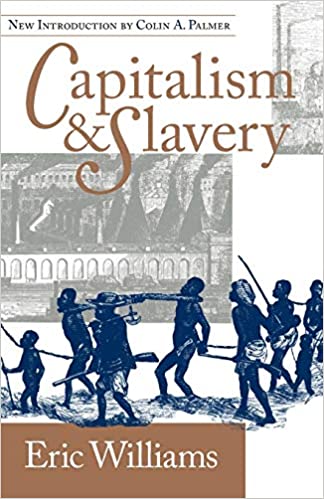
Historian Eric Williams in his book Capitalism and Slavery written in 1944 argued that the abolition of the slave trade had very little to do with the enlightenment ideas and the humanitarian mission of the 'saints' who argued the moral case for ending slavery, and everything to do with economics. He argued that while the slave trade had been key for growing Britain's wealth, by the end of the 18th and beginning of the 19th Century trade with the colonies was holding Britain back. 'Britain’s mechanized might was making the whole world her footstool. She was clothing the world, exporting men and machines, and had become the world’s banker.' This meant the colonies, and in particular the West Indies were now perceived as 'millstones around Britain's neck' that prevented free trade and meant that the nation was making a loss.
In this economic argument, businessmen, while they may have been imbued with the more enlightened ideas of the time, more importantly saw that they could benefit economically from ending the slave trade: the profits of slave trading voyages were declining and the slave trade was destabilising Africa. Meanwhile, British businessmen were investing in factories which paid wages and had to compete with plantations using free labour. Many business people hoped to make money from Africa by selling finished goods to Africans and buying palm oil and other African resources to use in their factories. Thus ending the slave trade could restore stability to Africa and make trade more profitable.
Recent historians have disputed this arguing that the economy of the British West Indies was still flourishing. However, Klein argues that this does not mean that it was only moral arguments that drove abolition - or a belief in the inherent equality of blacks. Rather, he argues that the anti-slave trade movement was 'based fundamentally on a belief in free labor as one of the most crucial underpinnings of modern society..To the workers of England facing the full impact of a wage system and self-determination in modern urban society, slavery was seen as antithetical to all the values of modern society and a basic threat to their own security, even if it was only in distant lands' (The Atlantic Slave Trade, pg 185). Thus although arguments against slavery had a moral origin they were also based on the interests of European workers and capitalists - not on the welfare of the African slaves.
Historian Steven Mintz puts forward a similar argument for the growth of abolitionism in America. Again, he refutes William's conclusions but states that 'When the North waged war on slavery, it was not because it had overcome racism; rather, it was because Northerners in increasing numbers identified their society with progress and viewed slavery as an intolerable obstacle to innovation, moral improvement, free labor, and commercial and economic growth.'
Task One
ATL: Thinking and self-management skills
- Consider all of the reasons considered above as to why the anti-slavery movement developed rapidly at the end of the 18th Century - resulting in Britain passing the Anti-Slavery Act of 1807. Discuss in pairs the significance of each of these factors. You could create a mind map with the headings below and add extra information.
- Which of these do you think was most significant in explaining the fact that Britain led the way in abolishing the slave trade.
Economic factors
The influence of religious groups, in particular the Quakers
The activities of SEAST
The role of key individuals such as Clarkson and Wilberforce
Actions of women
Actions of ex-Slaves
Enlightenment ideas (moral factors)
St Domingue Rebellion
Actions of Napoleon
Despite banning the slave trade, Britain continued to benefit from slave trading and slavery as you will see from this article
7. How successful was opposition to slavery in the Americas?
“It would be useless for us to denounce the servitude to which the Parliament of Great Britain wishes to reduce us, while we continue to keep our fellow creatures in slavery just because their color is different.”
Benjamin Rush, a patriot leader who signed the Declaration of Independence
North America
The Transatlantic slave trade was also abolished in America in 1807 preventing any new slaves coming into America from 1st January 1808. This followed on from two other significant Acts, one in 1794 which had prohibited American ships being used in transporting slaves and one in 1800 building on this and prohibiting American involvement in shipping human cargo. However, slavery as an institution continued for another fifty years.
Task One
ATL: Thinking skills
Listen to or read this npr interview with historian Eric Foner on the ending of the slave trade in America.
- What factors does Foner highlight as explaining the reasons for the ending of the slave trade?
- Why in fact did the number of slaves increase in America despite the ending of the slave trade from Africa?
- Why did many Southerners want to ban the slave trade?
- What was the impact of Enlightenment thinking?
- What happened to the abolition movement in America after the passing of the 1808 Act?
As you have read above, Quakers such as John Woolman and Benjamn Lay helped mobilise opinion against slavery in North America. However there were also other religious denominations such as Methodists, Baptists, and Presbyterians who were also very vocal concerning their dissatisfaction with slavery.
The Second Great Awakening of 1880 gave more momentum to religious opposition to slavery. The First and Second Great Awakenings were religious revivals; in the Second Great Awakening there was an emphasis on creating the true Christian Republic which would gain God's favour. This raised meant the moral issue of slavery had to be addressed; was it possible to be a perfect Christian society if people still owned slaves?
Some Americans, such as Benjamin Rush quoted above, also grew concerned at the contradictions that existed between the ideals of the American Revolution written into the Constitution, and the institution of slavery. Despite the rhetoric of liberty and human rights, the United States Constitution, adopted in 1787, protected the rights of slaveholders to slave property throughout the union.
Task Two
ATL: Thinking skills
Read this article on opposition to slavery in Connecticut in the late 18th Century.
What kinds of people opposed slavery? What were their reasons for this and what actions did they take? Did they achieve any successes?
Early Anti-slavery Advocates in 18th-century Connecticut | Connecticut History | a CTHumanities Project (Connecticut History | a CTHumanities Project)
Ideals advanced during the American Revolution inspired many of the state's religious and political leaders to question and oppose slavery in the late 1700s.
Other individuals including both ex-slaves and slave owners took up the abolitionist cause.
Task Three
ATL: Research skills
Use this History Article to find out more about Elizabeth Freedman, a slave who successfully sued for her freedom, and Moses Brown a slave owner who converted to Quakerism and became an ardent abolitionist.
Slaves also showed their opposition through rebellions, such as the Stono rebellion, which you have read about on the previous page.
Task Four
ATL: Thinking skills
Review resistance across the Americas up to the end of the 18th Century.
Discuss in pairs or small groups the following questions:
Overall, how effective was opposition to slavery in (a) the Americas as a whole (b) North America up to the start of the 19th Century?
How can you explain the successes and failures that you have discussed?
Note that there is more discussion of opposition to slavery and growth of the abolitionist movement in America in the 19th Century under the US Civil War topic:
1. Slavery
This page focuses on the key issue of slavery. Slavery was fundamental in dividing America and causing conflicts between North and South which ultimately led to the Civil War.
 Twitter
 Facebook
 LinkedIn